Soft borders, hard histories: Asia’s shifting lines
Contemporary Art — Southeast Asia
Vernissage
THOMAS
Curator · Writer · Visual Artist
This week I kept thinking about what holds—and what melts. Borders that pretend to be solid. Institutions that decide to move. Bodies that are asked to translate themselves. From here in Southeast Asia, these questions don’t feel theoretical: they’re daily weather. Three stories stayed with me because they show art as a tool for crossing, surviving, and re-forming.
01 — This Week

Against Fixed Lines: “Soft Borders” at Blindspot Gallery
This show gets the metaphor exactly right: textiles are the perfect language for contemporary identity—stitched, frayed, repaired, sometimes violently unmade. I’m especially taken by Yee I-Lann’s insistence that colonialism is not a chapter but a furniture rearrangement that never ended. And Angela Su’s hair-embroidered time systems hit me like a quiet panic: the most brutal border isn’t a wall, it’s the clock. Hong Kong feels like the ideal pressure-cooker for this exhibition—everything there is a negotiation of edges.
02 — This Week
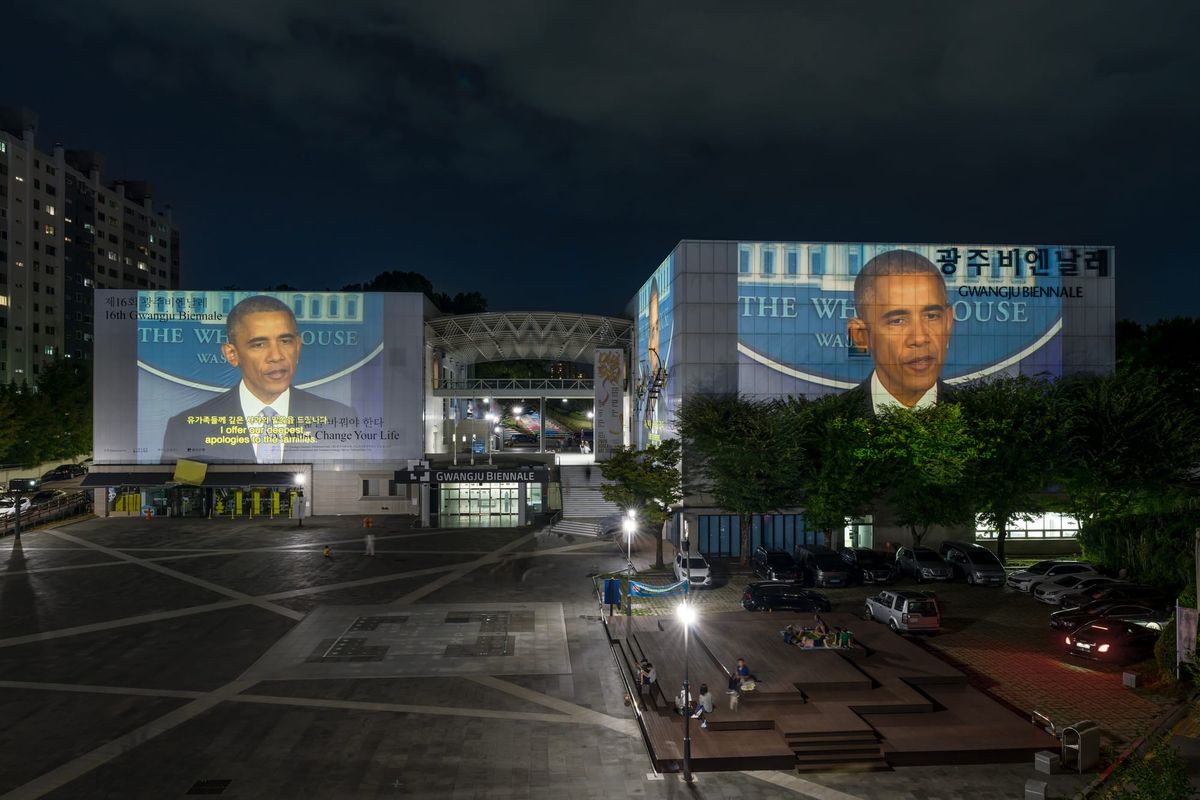
A Low Hum: The 16th Gwangju Biennale
Gwangju isn’t just another biennale stop—it’s a city where the political body remembers, and the exhibition seems to understand that memory has different tempos. I love the idea of transformation happening at multiple speeds: resin as wound-seal, volcanic rocks as deep time, repetition as both ritual and trap. What I respect most is how the show refuses easy catharsis: it asks for change, then shows how change gets postponed, performed, commodified. If you’re tired of biennales that “illustrate” a theme, this one actually argues with it.
03 — This Week
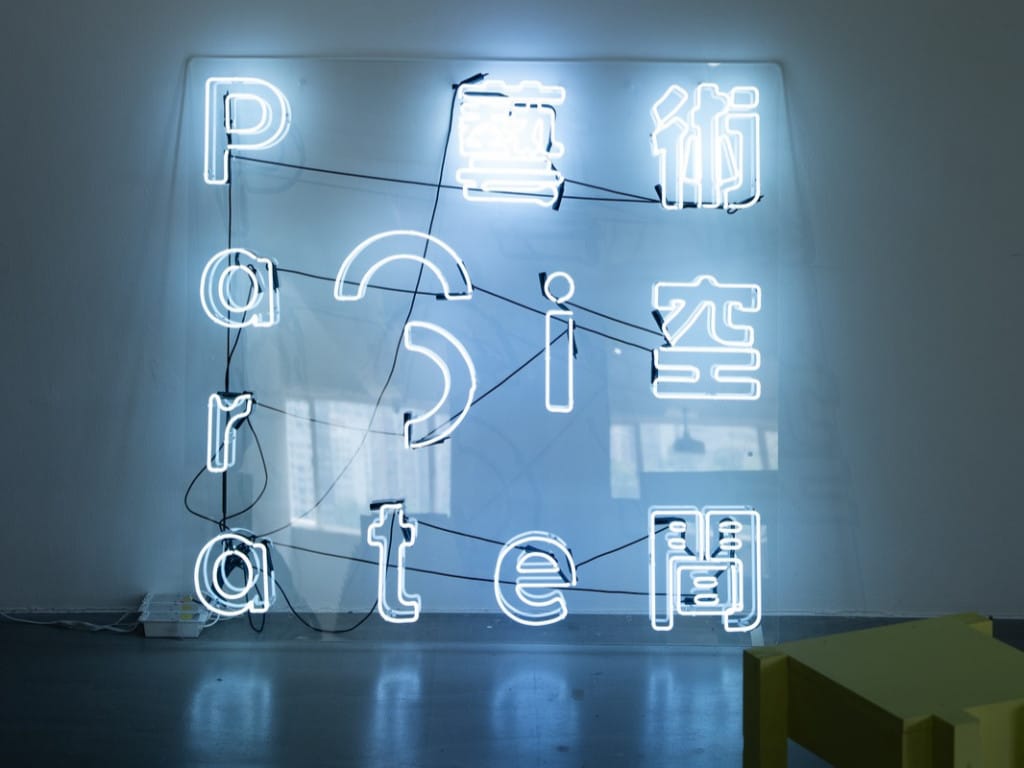
Para Site Announces Departure from Quarry Bay Location
I have a soft spot for institutions that choose uncertainty on purpose. Para Site going “nomadic” reads less like a crisis and more like a curatorial position. In Asia, space is never neutral: rent, politics, and visibility shape what art can be. Moving through the city can become a way to stay alive. The best part is the implied question: what if the institution is not a building, but a set of relationships? I’ll be watching closely—Hong Kong needs platforms that can shapeshift without losing their bite.
From My Books
I tried to draw a line around myself like a country on a map. But everything living ignores borders: desire, memory, fear. They cross at night, they cross in silence, they cross even when I pretend to be at peace. In the end, I understood that identity is not a territory—it’s a passage.
— Fragments
Pick of the Week
film
In the Mood for Love
— Wong Kar-wai
Because “soft borders” are exactly what Wong films: the invisible lines between bodies, apartments, languages, and time. Like Para Site’s nomadic year and Gwangju’s slow hum of history, it’s a story where what isn’t said is the architecture that shapes everything.
Quote of the Week
"You must change your life."
— Rainer Maria Rilke
Vernissage · Thomas · 2026