Water, archives, and the art of crossing
Contemporary Art — Southeast Asia
Vernissage
THOMAS
Curator · Writer · Visual Artist
This week I kept thinking about crossings: between coasts, between centuries, between what we call “document” and what we feel as truth. From Southeast Asia, the sea is never just scenery—it’s a force that remembers, punishes, carries, and sometimes forgives. And in studios and temples, I’m obsessed with the same question: what do we keep, and what keeps us?
01 — This Week
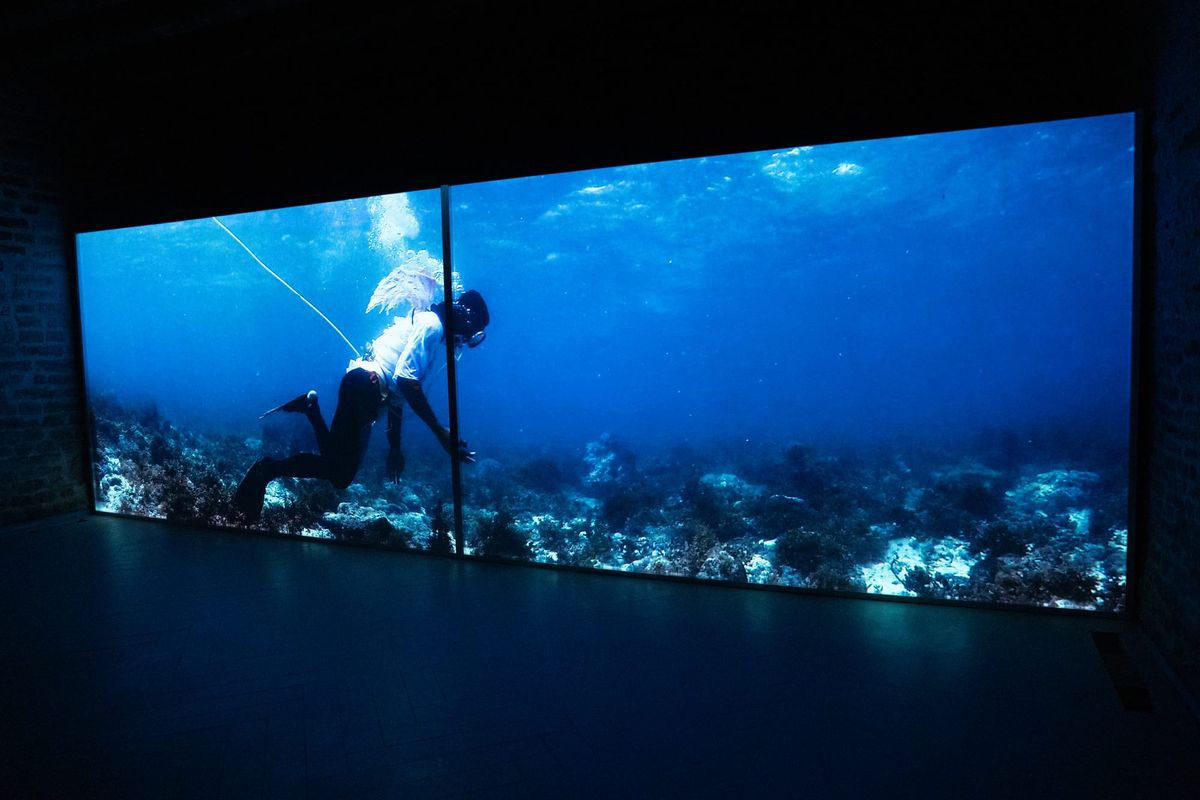
What Water Carries: “The Spirits of Maritime Crossing 2026”
This is the kind of show I want Venice to host: not a theme-park of “global contemporary,” but a real, uneasy tide of memory and ritual. Bangkok Art Biennale Foundation brings the sea back as an agent—ancestral, political, erotic, catastrophic. Martha Atienza underwater-processioning faith and survival is unforgettable; it’s beautiful, but it’s also an indictment. If you live in Southeast Asia, you don’t romanticize water. You negotiate with it.
02 — This Week
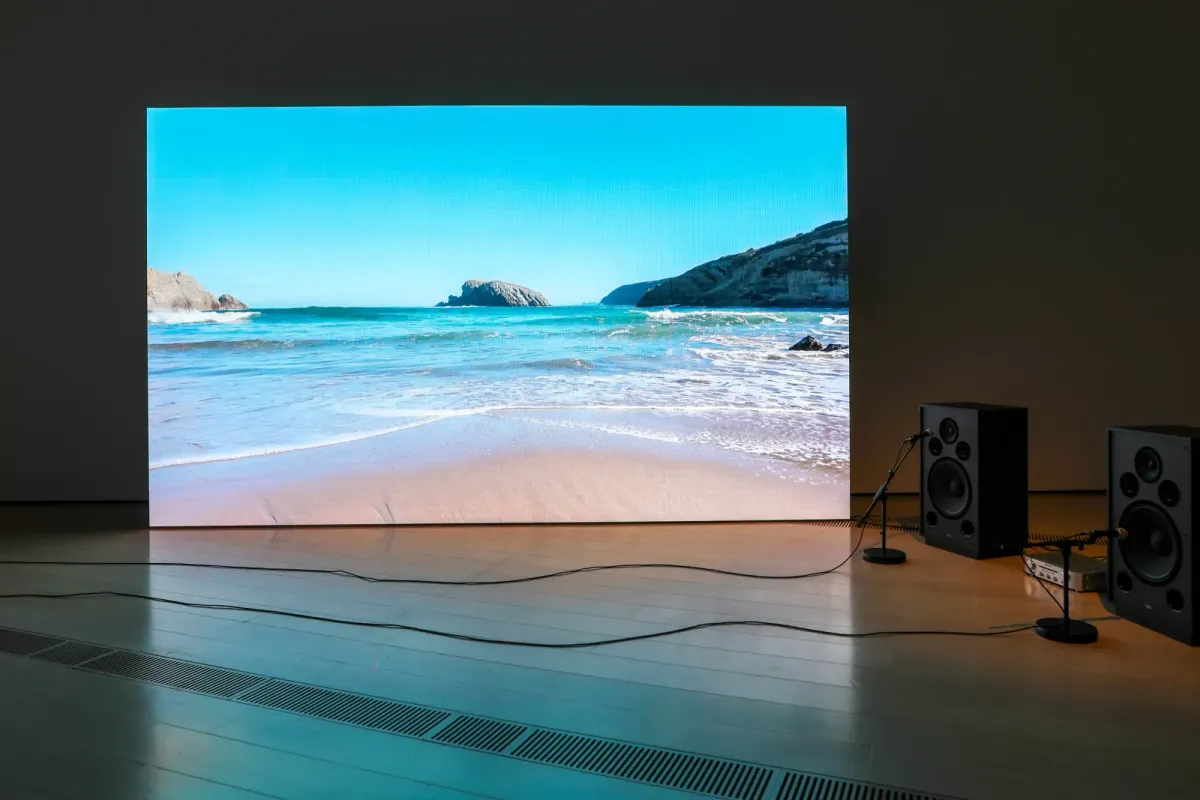
Yuko Mohri: “Entanglements” at Centro Botín
Mohri’s work hits me because it refuses the macho fantasy of control. The environment composes; the artist reroutes. Waves trigger a piano, dust becomes data, a goldfish turns into a myth about causality. I love that she lets the viewer hover in doubt: is the system really responding, or do we just want to believe it is? In an era of engineered certainty, Mohri makes poetry out of unstable feedback.
03 — This Week

Avatar Forms of Vishnu
I’m drawn to this exhibition because it treats “forms” as a living technology: images that travel, mutate, and keep doing political work. Vishnu’s descent isn’t just myth—it’s a model for how power narrates itself (hello, Khmer sovereignty). From India to Cambodia to contemporary commissions in 2026, the show reminds me that iconography is never neutral. It’s continuity, yes—but also strategy.
From My Books
He showed me a canoe, and I understood I was free to use it. Then, in a Spanish even more approximate than mine, he simply told me to go for a wander. I climbed into the frail boat and began to row in the direction he indicated. His wife, still near the house with a tray in her hands, waved at me broadly, smiling, as if I were leaving for a long voyage. I answered by lifting the paddle in a theatrical gesture before slipping into the jungle, surrounded by the green immensity and the mysterious sounds of the forest. I glided over the water, quickly finding a steady rhythm. Handling the canoe was instinctive. The landscape around me released such an enchanting harmony that it suspended time. I was moving through a fairy world, woven only from shades of green. The river, covered with a thin layer of duckweed, merged with the surrounding vegetation. Trees and ferns plunged down to the water, intertwined above me, forming an impenetrable vegetal ceiling. Sky and earth no longer existed. My sense of space wavered. Life teemed everywhere. The world had been reduced to green—omnipresent, enveloping, sovereign. Invisible birds slashed the air with sharp cries. Skittish creatures plunged into the water. Up high, howler monkeys let out long calls, as if announcing my arrival. I stopped rowing and let myself drift. I no longer felt I was on Earth—rather elsewhere, in a parallel, vegetal, shifting dimension. And yet, despite the splendor, something floated in the air: an invisible presence, diffuse but impossible to ignore. I whispered my name—Tho…mas…—as if to convince myself that my own ego existed, though it seemed to dissolve little by little into the environment. The syllables vanished into the air, and nothing any longer corresponded to that name. My social self faded, giving way to the dormant animal in me. No one on earth knew where I was. I could just as well disappear—blend into that sea of green—dissolve without leaving a trace. Later, when I returned with the old man, I would learn that this place is a sanctuary for forest spirits—benevolent entities fleeing humans and their perversions.
— Oneiric Experience
Pick of the Week
film
Uncle Boonmee Who Can Recall His Past Lives
— Apichatpong Weerasethakul
Because this week is about passages that don’t stay on the map: between the living and the dead, the visible and the sensed. Apichatpong understands Southeast Asia’s spiritual realism—where water, forests, and memory are active characters, not metaphors.
Quote of the Week
"The sea, once it casts its spell, holds one in its net of wonder forever."
— Jacques-Yves Cousteau
Vernissage · Thomas · 2026